

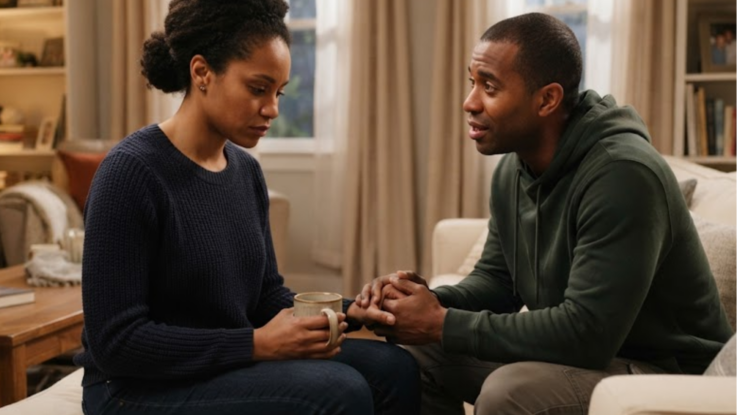
Every marriage experiences moments when one spouse hurts the other.
A harsh word spoken in anger.
A promise that wasn't kept.
A selfish decision.
A repeated habit that slowly chips away at trust.
In those moments, an apology is important.
But an apology alone doesn't always bring healing.
Why?
Because there's a significant difference between saying, "I'm sorry," and living out true repentance.
An apology acknowledges that something went wrong.
Repentance demonstrates a genuine desire to make it right.
Many couples become trapped in a painful cycle.
One spouse apologizes.
The other forgives.
Days or weeks later, the same behavior happens again.
Eventually, the words "I'm sorry" begin to lose their meaning because they are no longer supported by changed actions.
True repentance goes beyond regret.
It requires humility, ownership, and transformation.
Instead of saying, "I'm sorry you feel that way," repentance says, "I recognize how my actions hurt you, and I want to change."
Instead of making excuses, repentance accepts responsibility.
Instead of defending behavior, repentance seeks understanding.
Instead of repeating harmful patterns, repentance pursues growth.
Real change isn't always immediate, but it is intentional.
It asks difficult questions.
What caused this behavior?
What needs to change in my heart?
How can I rebuild the trust I've damaged?
What practical steps can I take to ensure this doesn't become a repeated pattern?
Trust is rarely restored through words alone.
It is rebuilt through consistency.
Every kept promise.
Every honest conversation.
Every intentional effort.
Every day of choosing different actions.
At the same time, the spouse who has been hurt also has a role to play.
When genuine repentance is present, forgiveness creates space for healing to grow. Forgiveness doesn't erase consequences or ignore wisdom, but it does open the door for restoration when both husband and wife are committed to rebuilding what was broken.
Scripture reminds us that repentance produces change. God's grace doesn't simply comfort us in our mistakes—it transforms us through them.
The same principle strengthens marriages.
A healthy marriage is not one where mistakes never happen.
It's one where both spouses are willing to admit when they're wrong, seek forgiveness with sincerity, and demonstrate love through changed behavior.
Anyone can say, "I'm sorry."
But lasting trust is built when those words are followed by actions that say, "I'm committed to becoming better."
That's where healing begins.
That's where relationships are restored.
That's where marriages become stronger than they were before.