

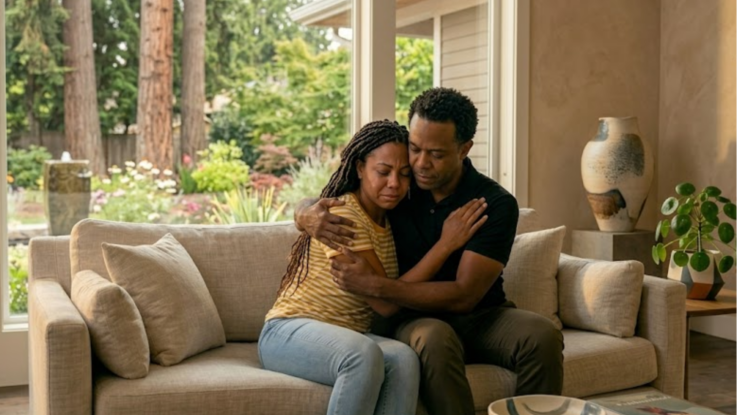
Have you ever found yourself reacting strongly to something your spouse said or did, only to later wonder, "Why did that affect me so much?"
You're not alone.
In many marriages, the issue isn't always what is happening in the present. Sometimes, it's what happened in the past.
Past experiences have a way of shaping how we think, feel, communicate, and respond in our relationships. Childhood experiences, previous relationships, family dynamics, disappointments, betrayals, rejection, abandonment, or unresolved pain can all leave emotional scars that quietly influence our marriage today.
The challenge is that many people don't realize they're reacting from a wound rather than responding to the current situation.
When the Past Shows Up in the Present
Imagine your spouse forgets to call or text.
To one person, it's a minor inconvenience.
To someone who has experienced abandonment, neglect, or broken trust, it may trigger feelings of insecurity, fear, or rejection.
The reaction may seem larger than the situation because the wound is deeper than the moment.
Past wounds can cause us to:
- Assume the worst
- Become defensive
- Withdraw emotionally
- Overreact to criticism
- Struggle with trust
- Fear vulnerability
- Avoid difficult conversations
Often, our spouse becomes the target of pain they didn't create.
Identifying Emotional Triggers
Emotional triggers are strong reactions connected to unresolved experiences.
Ask yourself:
- Why did this situation affect me so deeply?
- Does this feeling remind me of something from my past?
- Am I responding to my spouse or reacting to an old wound?
- What fear is underneath my reaction?
Self-awareness is one of the most important tools for healing and growth in marriage.
When we understand our triggers, we gain the ability to respond more intentionally instead of reacting automatically.
Healing Requires Honesty
Healing begins when we acknowledge the hurt rather than ignore it.
Many people spend years pretending they are fine while carrying emotional baggage into every relationship.
The truth is that buried wounds do not disappear.
They often resurface in moments of conflict, stress, disappointment, or vulnerability.
Honesty with yourself and your spouse creates opportunities for understanding and healing.
Instead of saying:
"You always make me feel ignored."
Try saying:
"When this happened, it triggered feelings I've struggled with before, and I'd like to talk about it."
That shift creates connection instead of conflict.
Extend Grace to One Another
Every person enters marriage with a story.
No one arrives without experiences that have shaped them.
Healthy couples understand that both partners are works in progress.
Grace allows room for healing.
It recognizes that your spouse may be carrying burdens, fears, or insecurities that aren't immediately visible.
Compassion creates a safe environment where healing can take place.
Healing Together
Marriage can become one of God's greatest tools for healing when both spouses commit to understanding and supporting one another.
Healing may involve:
- Honest conversations
- Forgiveness
- Counseling or coaching
- Personal growth
- Prayer and spiritual guidance
- Learning healthier communication patterns
The goal is not to blame the past for every problem.
The goal is to understand how the past influences the present so that it no longer controls the future.
A Better Response Is Possible
You cannot change what happened yesterday.
You cannot rewrite painful chapters from your past.
But you can choose how those experiences shape your future.
When couples recognize the connection between past wounds and present reactions, they gain the opportunity to break unhealthy patterns and build stronger, healthier relationships.
Remember, healing is not weakness.
Healing is strength.
And every step toward healing is a step toward greater intimacy, trust, and connection in your marriage.
Because the healthiest marriages aren't made up of perfect people—they're made up of people who are willing to heal, grow, and love each other well.